SEASIDE PROMENADE – LANDSCAPES - BEACH
Starting from Catene de containers, this walk unfolds along the seafront, passing the masts of the marina before reaching the lively beach area. The route follows a round trip along the promenade. Some walkers may choose to continue on to Le Bout du Monde, a secluded beach located at the tip of the coastline (about 1.5 km further), while others can take the green trail to reach the city’s heights.
Step 16 : Catene de Containers
This work bestows an astonishing grace and lightness onto the heavy containers. It forms a symbolic gateway between the city and the port, with its monumental scale matching the grandeur of its surroundings.
Anne-Bettina-Brunet.jpg)
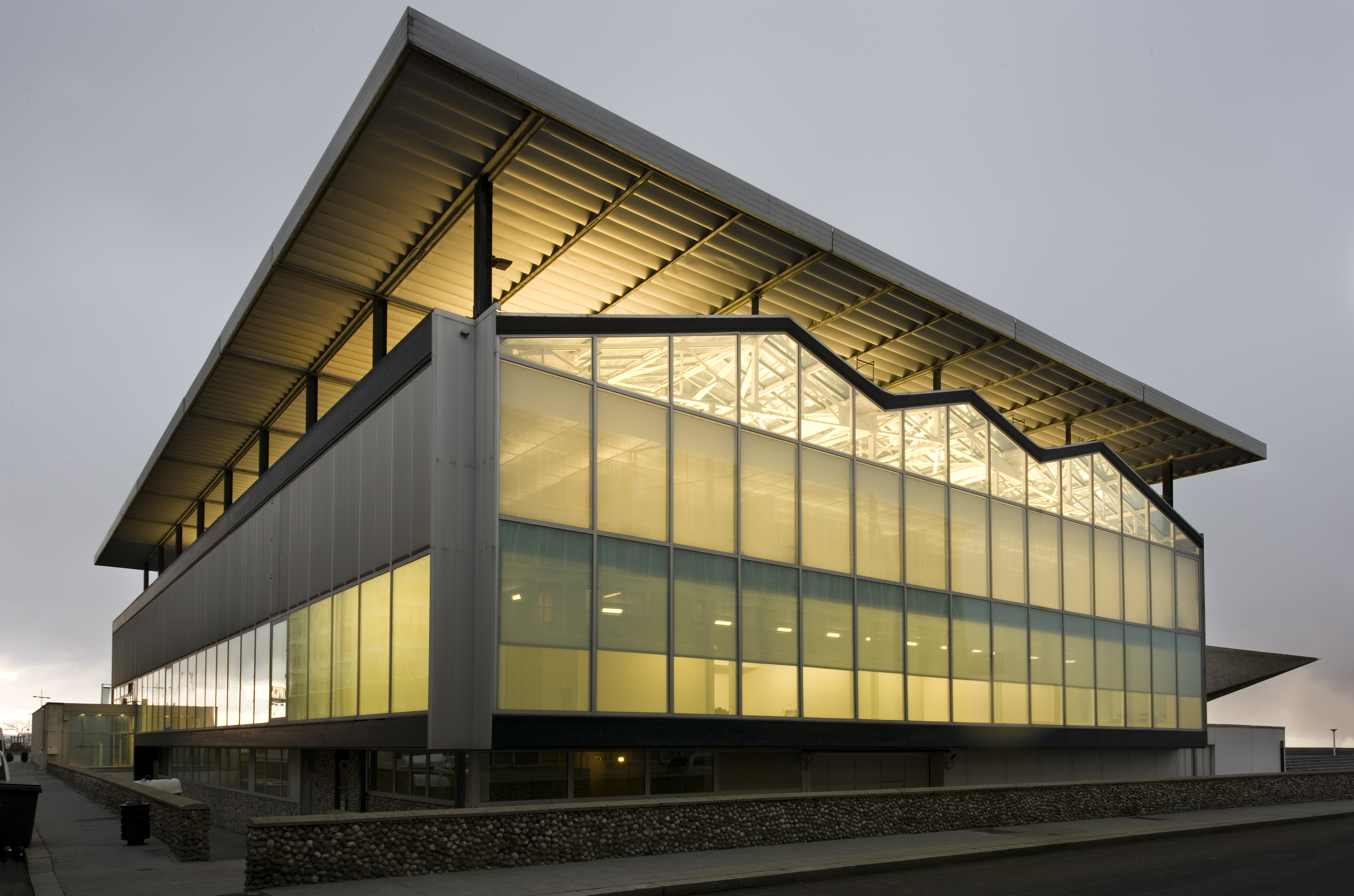
Step 17 : MuMa
Inaugurated in 1961, MuMa houses the second largest French collection of Impressionist and Fauvist works, with artists such as Boudin, Degas, Manet, Monet or Renoir. Of glass and metal, this building's innovative structure was designed by architects Lagneau, Prouvé, Weill, Dimitrijevic and Audigier.
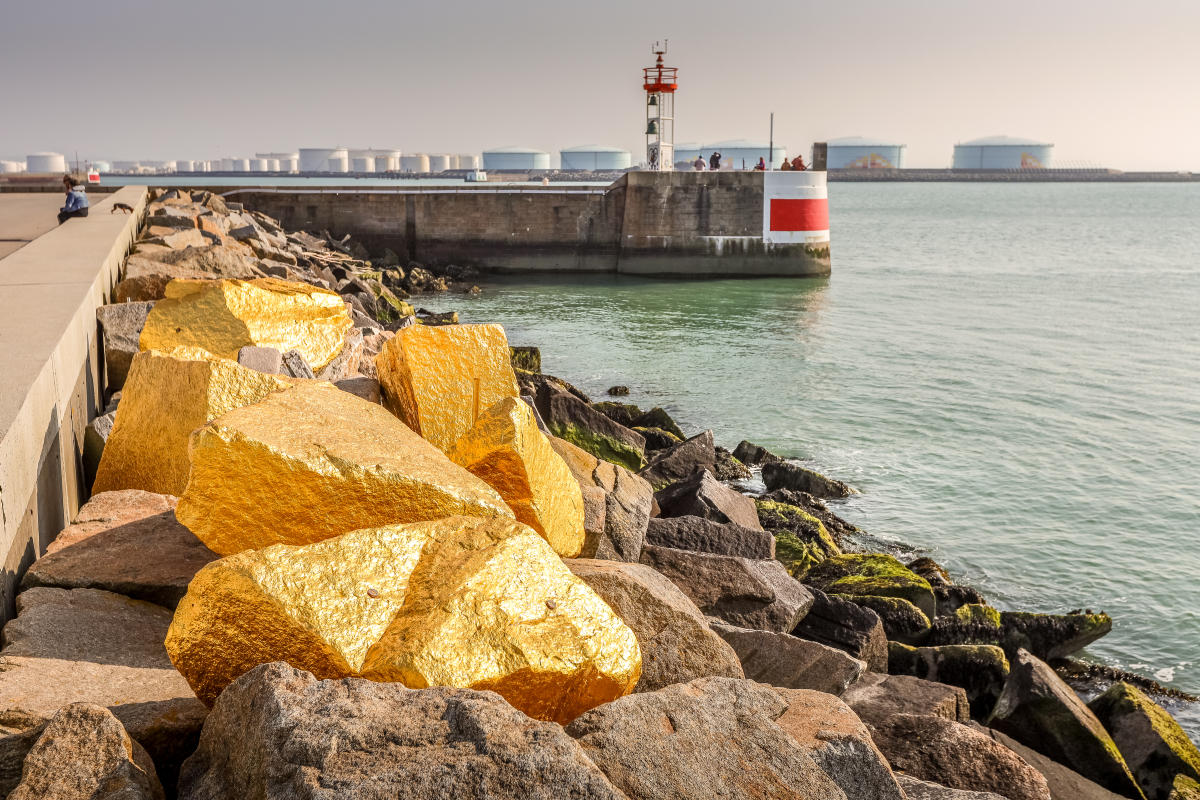
Step 18 : Gold Coast
A formation of hybrid minerals emerges from the seawall. This band of stone, adorned with gold as if it were a precious heritage, creates the illusion of giant, dazzling gold nuggets—a nod to the utopian vision of a maritime El Dorado.
Step 19 : La ville qui n'existait pas IV : La maison des rêves (2612)
Inspired by Auguste Perret's architecture, this telephone cabin is both familiar and strange. Voice recordings from fictional inhabitants can be heard through the receiver, reminiscing about a city that never existed, yet bears a resemblance to Le Havre.
.jpg)
Step 20 : Jusqu'au bout du Monde
Two figures contemplate the sea at the entrance to the harbour, from which ships come and go. The sculpture looks out across to New York and evokes memories of past departures to this destination, symbolising the bond and love between a father and his daughter.
-min.jpg)
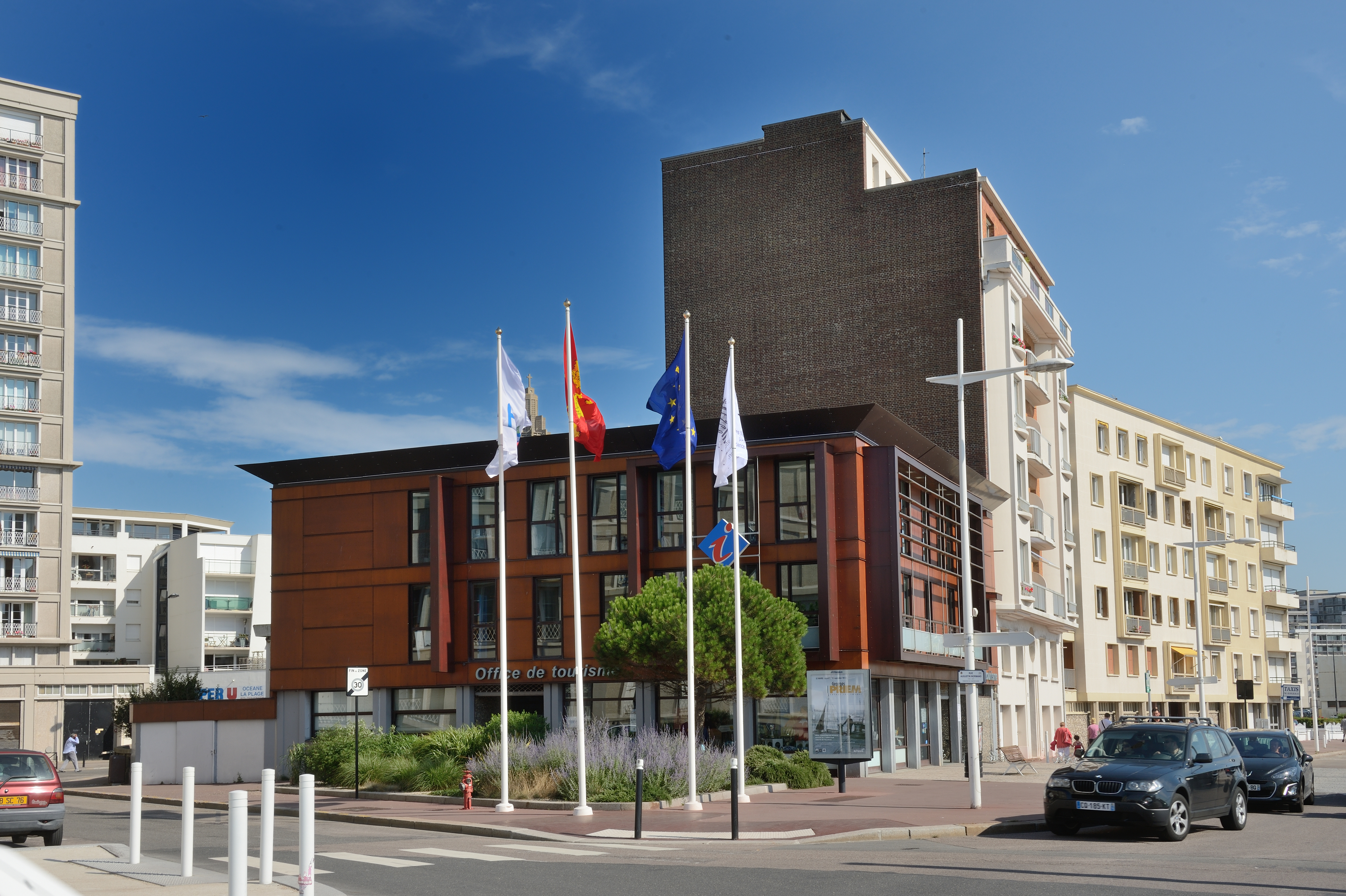
Step 21 : Tourist Office
Le Havre-Etretat Tourist Office is open every day from 9.30 am to 1 pm and from 2 pm to 6.30 pm to help you make the most of your stay. Come and enjoy personalised advice, suggestions for things to see and do, and a selection of lovely souvenirs to take home.
Step 22 : À revers, rêvera
A blue-toned design, which is both abstract and figurative, blends seamlessly with the distinctive roof of this shelter, which was previously known as the ‘coquillage’ (the shell). It alludes to the movements which characterise this landscape, such as sea currents, gusts of wind and bird migrations.
-Laurent-Lachevre-(14).jpg)
Step 23 : Up #3
This piece, viewed from Avenue Foch, appears to be framed by the Porte Océane, and stands silhouetted against the coastal horizon. The work rises from the pebbles and reproduces the skeleton of a building from Perret's city, detaching itself from land as if to approach the sea. The angles of Up #3 endlessly complement one another in Le Havre's changing light.
-Philippe-BREARD---Ville-du-Havre.jpg)
Step 24 : Épi
Épi No. 8 was the last wooden groyne still in use on the beach at Le Havre. Sculpted by the passing years and by the sea spray, it was a reminder of the constant battle which man wages against nature to maintain the coast line. Now reproduced at full size using an artificial rockwork technique, it has been turned into a sculpture which bears witness to the past.
.jpg)